
- CBD for Anxiety and Relieving StressContinue reading →

CBD for Anxiety and Relieving Stress, by Kerri Connor
(Article originally published in The Llewellyn Journal.)
It
There is no doubt our world has become an overwhelmingly stressful place to live. Between a global pandemic, an attack in on the US Capitol, and war in Europe, it would be difficult to find someone who has not been affected tragically by one of these events.
With so much stress in the world, a person's mental health has taken on a new importance. While we can not control so many of the things that happen around us, we can learn how to cope with these events. Ways we cope with anxiety and stress include medication, therapy, meditation, acupuncture, and/or supplements.
CBD (which stands for cannabidiol) won't solve the problems in the world, but it can help eliminate anxiety and stress so you may focus on events and aspects of your life where you do have control. Adding it into your daily routine may help you calm your nerves and gain control over anxious feelings.
CBD is available in a variety of forms, and what you decide to use is based on what type of relief you want, how fast you want it, and what forms of consumption you prefer. I recommend layering how you take your CBD. This means taking it in several different forms, so more CBD molecules bind with CB receptors, saturating your endocannabinoid system. This helps put the body into the most optimum homeostasis, not only relieving anxiety, but also to help keep it at bay.
Take a Hit
Smoking CBD hemp flower is the fastest pathway for CBD to reach the bloodstream, so the effects will hit you quicker than any other method. It also has high bioavailability, meaning your body absorbs it easily. When you need a quick, strong dose, smoking flower is the way to go. How you smoke your flower is up to you, but CBD flower can be smoked the same way cannabis flower is. Grind the buds and roll in a joint or blunt, throw it in a bowl, pipe, or bong—whichever method you prefer. Boost the power of the CBD by combining it with other herbs that help calm nerves and reduce anxiety, such as rose petals and lavender buds. This blend may be just what you need to help cope with an anxiety attack or other stressful situation. Help yourself unwind gently and quickly.Drip Some Drops
CBD concentrated oil should be one of your best friends. It can be used in several different ways, making it an incredibly versatile ingredient to keep on hand. For oral use, it can be placed under the tongue (sublingual) and held there for up to 30 seconds without swallowing. This isn't as fast as smoking but is faster than taking orally through any type of edible. If you are layering your CBD, this is a good second step after smoking. If you don't smoke, a concentrated oil should be your first layer.Tinctures are also taken sublingually. Tinctures are made with a strong alcoholic spirit, which may help to calm nerves and mellow a panic attack. I keep a tincture available for extra stressful times in my life when I know I am more likely to be triggered into an anxiety attack.
Grab a Bite
Concentrated oil can also be added with a dropper to drinks or foods. There are many great recipes for cooking and baking with concentrated oils, but when you don't have time, you can make it easy by simply adding a dose to a drink or mixed in with something like yogurt. Taking it through food means it must pass through the digestive system and liver before it makes it to the blood stream. This means slower effects and lower bioavailability.Pre-made edibles also travel through the digestive system. Gummies, by nature, break down quickly, cutting down digestion time. But due to the pathway they take through this system to enter the bloodstream, they also have lower bioavailability.
CBD capsules can also be considered edibles since they travel the same path to the bloodstream via the digestive system and liver.
Because edibles take longer for the effects to take place, layering them with other quicker consumption methods means they will start kicking in as the effects from the other dose are lessening. For example, if I take a gummy right after I smoke, I will feel the effects from smoking almost immediately. As those effects begin to lessen, the gummy will have been digested and the CBD begins entering the blood stream, and those effects begin to build. With layering, while the effects from one type of consumption are declining, the effects of another type of consumption are building extending your optimum calm.
Soak It Away
Anxiety and stress create tension in the body causing muscle pains and aches. CBD can be used topically to help release stress stored in your body. You can add CBD to your bath as an ingredient in easy to mix bath salts. Epsom salts are ideal for tight sore muscles and should be a staple in your supplies closet. Other salts, such as sea salts or Himalayan pink salts, can also be added, but Epsom salt does have the benefit of relieving muscular pain. To complete your bath salts, add in essential and CBD oils and blend well.I like to use the following mix:
- 1 cup Epsom salt
- ½ cup pink Himalayan salt
- 1 dropperful of CBD oil (I use 1500 mg)
- 6 drops of tangerine oil
Choose essential oils to help achieve your overall goal. I use tangerine oil as it helps with inflammation, and as someone with several autoimmune disorders, when I get stressed, I flare, and my inflammation gets out of control. Tangerine also has a bright, cheery scent that uplifts the spirit.
Massage Tension Away
Your CBD concentrated oil can be added to a carrier oil along with essential oils to design your own customized massage oils.A 16-ounce bottle of jojoba oil can be split into four 4-ounce bottles of massage oils, each one with a different blend of essential oils. The dollar stores are a great place to grab small plastic bottles for separating your carrier oil. Add a dropperful of CBD oil to each bottle with the essential oils you choose and shake well. Do some research on oil blends to find what will be the most beneficial for you.
Daily Dose
These are all easy ways to incorporate CBD into your life. Daily use helps your body to function at more optimal levels, which helps to eliminate stress. When life gets out of hand and throws you for a loop, extra doses can help bring you back to a calm and collected state of mind.Always seek the advice of a qualified health provider regarding medical questions. This article is not a substitute for medical advice. CBD may counteract certain medications, including those used to treat blood pressure, blood clots, and thyroid, liver, and heart issues. In some medications such as antidepressants, it may increase the effects. Consult with your doctor before using CBD to ensure it is safe for you.
Article originally published in The Llewellyn Journal. Copyright Llewellyn Worldwide, 2022. All rights reserved.
- Double Vision: Pendulum Stopped WorkingContinue reading →
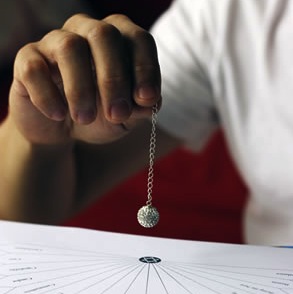
I have used a pendulum to get spiritual guidance with great success in the past. I'm pretty sure that I have been speaking with my spirit guide in this way. I also spoke with a friend who passed away a couple of years ago. Just yesterday I asked the pendulum a question, and it didn't want to answer me, or at least it wouldn't answer specific questions related to me. So I asked if my spirit guide was there, and the response I got was 'no.' My spirit guide is not there again today, and I am wondering what happened. I can't get a straight response out of whoever has taken over. I had come to depend on the pendulum as a source of guidance. It has been a great way for me to feel connected with All That Is. I even used the pendulum with the help of my spirit guide to balance my chakras. It is disappointing to me that something seems to have happened. Where is my spirit guide? Why won't any other beings answer my questions? What is going on? Thank you so much for you wonderful words of wisdom.
KristenSusyn:
A pendulum can be a wonderful source of divination, but as with all tools of this nature, it's important to make sure they are properly cared for. It could be that the pendulum itself has lost reception. Here are a few things to check before you run out and buy a new one.
Pendulums should always be stored in a pouch, bag or silk cloth. If you leave it lying around on your dresser or desk, it can pick up lots of stray energy. Random spirits are often attracted to pendulums; they can attach themselves to your pendulum, or try to play games with you as you attempt to use it by influencing it to say yes when the truth is no and vice versa.
Pendulums should be cleansed once a month. If your pendulum contains precious stones or crystals, lay it on a window sill in the sun for a day to clear and recharge it. You can also soak the pendulum in a solution of warm water and mild soap if its components are waterproof. Another way to cleanse your pendulum is to light a wand of incense; as the smoke rises, pass your pendulum back and forth through the smoke.
Each time you use your pendulum, you should begin the session with a clearing. I gently twirl mine in a circular motion while asking Spirit to clear it. After ten seconds or so, I ask the pendulum if it is clear. If I get a no, I spin it a bit longer until I get a yes.
I've also noticed that when Mercury is retrograde, my pendulum will start reversing itself, moving vertically to indicate no instead of yes, and horizontally to indicate yes instead of no. So, if you are getting answers that make no sense, stop and ask the pendulum to show you a yes and see what direction it moves. Do the same for a no answer. Then, just to test it out, ask it a yes or no question you already know the answer to. This will ensure that you and your pendulum are communicating properly. (Note: You should test it again once Mercury goes direct, as often this will reverse the indicating motions again.)
If you have tried all of the above suggestions and your pendulum still refuses to move or answer you, one of two things could be happening: Either you are not phrasing your question clearly, or Spirit does not feel you need the answer at this point in time.
It's always a good idea to have two or more pendulums handy so you can double-check answers or see which one works better at a given time. Mine can be a bit temperamental, so if one is refusing to answer, I'll switch to the other. I'm certain that if you follow the above procedures, you'll be reconnected to the power behind the pendulum and once again be able to access the wisdom you need.
*****
Oceania:
Oracles like pendulums, tarot cards, runes, and the I-Ching are means of seeking and receiving wisdom. Sure, we can pray and meditate, but using a tangible object or even a virtual oracle can be fun! It's reassuring to know that whenever we have questions, there are ways to connect with answers. Oracles help us reach beyond the limited views of our own egos for higher perspectives.
This sentence jumped out at me: <q>I had come to depend on the pendulum as a source of guidance.</q> I don't believe an entity has taken over your pendulum; I think, rather, that your spirit guide is urging you to practice tapping into wisdom without your oracle. Perhaps you could set the pendulum aside for a while and try answering questions without it.
There was a time when I depended upon tarot cards for input during readings. When I'd go to my mother's house to help care for her, I'd bring along my tarot cards and log in to Kajama from her computer. I remember the first time I forgot my cards...Eek! I felt lost and didn't think I'd be able to read for my clients, but something urged me to try. It was scary, but I did my best, and with ongoing practice, I learned I didn't need the cards to provide helpful readings.
I still enjoy using them, but no longer feel dependent on them. I suspect it's time for you to learn to hear the input of your guide, your departed friend, Spirit, Love and your own inner wisdom without your pendulum. I think you've hit a dead end because it's time to try something new. Perhaps your journey will even lead you to start reading for others.
I think your guide stepped back as an invitation for you to practice trusting in your own direct access to wisdom in much the same way that a parent takes the training wheels off a bike when a child seems ready to rely upon his or her own sense of inner balance to stay upright.
A side effect of any spiritual pursuit is personal growth, so don't be surprised when things change: they surely will from time to time. While it's tempting to kick and scream when things don't go as planned, it's always best to surrender and go with the flow. Instead of feeling betrayed and dismayed, see if you can muster up your sense of humor and say, <q>OK, Spirit; you know best!</q>
After a few surrenders, you'll come to trust that whenever things seem to be going wrong, there is likely a better path with a broader perspective coming into focus. A smile, a shrug, and a splash of humility can go a long way at such times!
Astrea:
Many times in life we hear, "You will always have what you NEED, but not necessarily what you WANT." Your spirit must have needed to experience the feeling of leaving your human body, and the suggestion in the next chapter of Sylvia Brown's book was all it took to get you there.
Even though you hadn't read it yet, your SOUL recognized the title of that chapter as something it had been seeking, and your soul, knowing that you had that reference to read after your experience, got with it and out you went!
While I don't usually recommend her books, Sylvia Brown has a wide reaching and powerful effect on lots of people. A Gemini like you would be able to relate easily to her writing and put it to good use. Synchronicity - you gotta love it!
I like your description of "getting caught." That's exactly what it feels like, isn't it? One minute you're free and hovering above the room, and the next minute, ZAP! back down into your corporeal form you go!
As a little kid, I loved that "feeling of return." With practice, most of the time we can control that event, but sometimes, when our physical ears hear a distracting noise or something else occurs to knock us back into reality, back we go. With practice you will be able to control your return better.
I find it interesting that you were visiting your mother-in-law and not someone in your own genetic family. Evidently, you and your husband got married for reasons that are even deeper than love. His family's interest in "psychic stuff" will nurture your children in such matters and help them to grow into their own abilities.
You'll never have to be concerned that when your daughter visits them, she'll be discouraged from exploring her own psychic life and power. My parents encouraged me to develop my psychic senses in a time when it wasn't nice to even discuss such things in public. Heck, it's STILL not considered a great topic at the dinner table in some families!
Your kids will get to talk about it ALL and ask questions and read and study. This is going to give them such an edge in life! Talk with your husband about how you want to present this to your kiddos, so that you are united in your approach and ready to tell them their experiences are all natural and okay.
A word or two of warning: Geminis often have difficulty staying grounded in REAL LIFE. Don't get so strung out on your ASTRAL life that you neglect what you're doing here on Earth.
You are at the beginning of a long journey to learn where your power really lies. Try to be patient with this process and take your time.