
- Tarot: Looking at Both the Mundane and the DivineContinue reading →
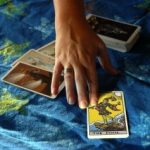
Tarot: Looking at Both the Mundane and the Divine, by Lisa Freinkel Tishman, PhD
(Article originally published in The Llewellyn Journal.)
I'm a shaman and a mindfulness teacher. You may not think that these two identities are at odds, but I'm here to tell you: they are.
The Oxford English Dictionary tells us that a shaman, "is a man or woman who is regarded as having direct access to, and influence in, the spirit world which...empowers them to guide souls, cure illnesses, etc..." Shamans divine—"divine" here in the verb sense of the word. Shamans practice divination, meaning that they receive truth from divinity. Shamans light sacred fires, peering into the dancing flames. They gaze into the fathomless depths of an obsidian disc. Or perhaps they sift through the dregs of a holy brew and channel hidden messages. Shamans receive truth from the beyond.
In contrast, we mindfulness teachers are continually pointing folks back to the here and now: to this body sitting in this chair, sipping mint tea as the birds start to sing on this particular drizzly spring morning...Mindfulness, in other words, guides us back to our own ordinary experience: to this collection of skin and bones and intestines and hormones, moods and thoughts, burps and belches, eyelashes and finger nails and tastebuds.
Shamans channel truths from elsewhere. Mindfulness practitioners bring loving, non-judgmental attention to the world all around us. Shamans reveal—unveil the hidden. In mindfulness we just point: look here. It is what it is.
Shamans try to fix things, cure things, manifest new outcomes. In the ancient world, kings and commanders sought to win battles, gain wealth, woo their women with shamanic help. For every Stannis Baratheon seeking the Iron Throne, you had someone like the Red Women divining and spellcasting at his side. Heck, even Nancy Reagan had her astrologer, Joan Quigley. Nancy brought Joan into the White House after John Hinckley's failed assassination attempt on the President. She hoped a shaman like Joan could save Ronnie's life—preserve his power—and shape the future of the free world.
In mindfulness practice, however, we're not trying to shape anything. As I tell my students: nothing is broken, nothing needs fixing. Let's hunker down in life as it is—noticing what's already here and all around us. This is the path to accepting ourselves and to finding our way home. This is not about power, exactly. This is about peace.
Shamans offer power and influence from beyond. Mindfulness offers peace and humble self-acceptance right here.
How can I be and do both? Shaman? Mindfulness teacher?
In my book Mindful Tarot, in fact, I make a sharp distinction between between a "mindful Tarot" practice that points us to the world right before us—and a prophetic or shamanic practice that looks for answers from a world beyond.
But, I'm also living proof that when we deeply investigate what it means to be mindful—what it means to bring loving, accepting attention to the world all around us—then that's precisely when the world of shamanic magic begins.
I learned this truth at a silent Zen meditation retreat a few years back. I was the retreat leader, and part of my job was to figure out where everybody would sit. It sounds easy, but people were coming and going all week long—and since meals were being served in silence, in formal Zen style, right at our seats—my job included a complex game of meditation hall Tetris.
Do you remember Tetris? That video game where you manipulate falling blocks so that they slide neatly into place? At this retreat, I needed to figure out how to arrange the room throughout the week. I had to keep all the gluten-free people in one corner of the hall, and all the vegans in another. And where would I seat Sally, who had to avoid legumes at all costs? Could Billy take her place at mid-week, or would his life-threatening allergy to onions and garlic confuse the cook and the food servers too much? In this complex culinary choreography, how could I make sure everyone got safely and promptly served throughout the week?
I remember sitting during a meditation period one day and instead of bringing my attention mindfully back to my breath, I couldn't stop obsessing over a mental map of the room. I focused my mind's eye on an internal image of the hall, picturing how I might move chairs and mats around as the week unfolded and participants, with their nut allergies and such, came and went. In my mind's eye, I kept shuffling the pieces of the puzzle around, trying to map the perfect flow of bodies. I was trying to fit everything into place.
The effort was exhausting! My mind couldn't stop churning.
And suddenly it dawned on me: this is what we do with all of the pieces of our lives, every day. We create mental maps, as it were, of places and people and things of our world—and then we try to maneuver the parts so that everything fits.
We do this in ways both subtle and obvious. At the more obvious level, I might imagine my drive to work, picturing how the traffic flows at 7:35 a.m. and trying to plot the perfect, quickest, easiest route from door to door. At a more subtle level, I might worry about a difficult conversation I need to have with my boss once I get to work, and I might picture all the things I could say and all the ways she might respond—trying in advance to control the dialogue and achieve a favorable outcome.
But the fact is, when we play Tetris with the world, we often lose. We all know how easy it is for our mental maps to be wrong, and for our calculations to fail. Traffic patterns often defy our expectations, and difficult conversations often go sideways. The truth is, it's hard to maneuver our lives. All too frequently, the world pushes back. Life usually refuses to slide neatly into place.
That's why I love the Tarot so much. When I draw the cards and lay out a spread, the pieces of the puzzle fall precisely where they fall. My job as reader requires that I interpret the pattern right in front of me. I don't get to move things around—to return that pesky 10 of Swords back to the deck, or to move the 9 of Cups into its place. I can't play Tetris with Tarot. The cards I've pulled are precisely what I must work with. Anything else would feel like a cheat and a dodge. If I'm going to get serious about Tarot, I need to make sense of whatever cards I pull, learning to interpret them in their own terms, right here and now.
Indeed, Tarot teaches me to accept the hand that I've been dealt.
What a metaphor for life! How often do we take a long deep look at what is—at the cards we've been dealt, in life—and accept them without hesitancy or reserve? But such is the work of mindfulness, where we bring open and kind attention to our present-moment experience. Mindfulness asks us to take our time, to open our heart, and to accept the patterns of life just as they are.
In this mindful decision to play the hand we're dealt, we also find the origin of shamanic empowerment. The shaman's insights emerge from the patterns that the world provides, whether she consults the wheeling constellations of the sky, the spread of the cards, or the reticulated swirls of a crystal quartz.
Because the insights of the shaman can seem profound and life-changing, we tend to think their source lies beyond mere appearances, beyond the everyday. But indeed, the shaman's true strength precisely derives from the everyday. She refuses to turn or twist things around. She sees, deeply, the ordinary patterns that others bypass. Her power lies in her ability to examine the world unwaveringly, in its truest form. She really looks at the world, precisely as it appears, here and now.
Jesuit theologian Walter Burghardt once called mindful contemplation, "a long, loving look at the real." Mindfulness requires gentleness and love, and a deep willingness to encounter reality.
Being a shaman requires the same love, the same extended embrace of our lives. If shamans have the power to cure and transform, this power begins in love.
Article originally published in The Llewellyn Journal. Copyright Llewellyn Worldwide, 2019. All rights reserved.
- Double Vision: Visit from Future Grandson?Continue reading →

I had a dream that I met my future grandson. Neither of my children have a baby on the way, but in my dream, I saw a child about two years old, standing in my bedroom. I looked at him and asked if he was C.J.'s son. (C.J. is my son.. He didn't answer at first, but walked over to me. I looked at him and said,
You are C.J.'s son.
He saidyes
and smiled. I touched his shoulders and arms, and when I awoke, I could still feel him as though I was still touching him. I wasn't sure at the time if I had really been asleep or what had happened. This happened a few years ago, and I can still remember this very vividly, including how this child felt. Do you think this was just a dream, or could it have been an actual visit from my future grandson? As an added note, I had dreams about both of my children before they were born, even though they were adopted! The dream regarding my son came true exactly, word for word. The dream about my daughter wasn't exact, but portrayed her spirit perfectly.
Mary LouDreamchaser:
You made me laugh, girl! You describe this profound experience and how this same thing happened with your own children, then you ask if it was just a dream. This is such a great example of LOGIC confusing things. In the dream, you knew instinctively that the boy was C.J.'s son; you didn't even ask if he was your daughter's boy.
This is a great example of soul family recognition. You recognize this boy in your dream as someone you've known in other lifetimes. Your soul knows who this child is and where he fits into THIS life. Have you ever known someone who was just so comfortable and so familiar that you two got along famously from the first moment you met? Have you ever wondered why some people repel you, and some people attract you? We have a network of souls that follows us around the Universe from lifetime to lifetime!
I certainly hope you keep a pen and paper by your bed so that you can write down the things that you need to remember when you wake up. You dream so much that you probably need a lot more sleep than everyone else. We all have periods when we are doing all this important soul work in our sleep, but you have always done it on a much heavier level. Not only do you dream your own solutions - you dream everyone else's too!
If you aren't already familiar with lucid dreaming, please research it. You are a very avid lucid dreamer. I would like for you to become even more aware and active. You could accomplish so much in your sleep if you were fully cognizant instead of just enjoying the ride. Not everyone can do what you do in your sleep. There are ancient people who believed that the dream world was the real world and this world is the fake world. You could very well be descended from those people, Mary Lou, so please look at this gift of yours more closely.
When this child that you dreamed of does come into your life, you two are going to have a very special bond. You are going to like being a grandmother very much. You love your family the way it is, so having MORE family will only be better. He came to you in that dream to tell you that he is coming. I wish you many more insightful dreamland journeys!
*****
Astrea:
Yes! You did indeed have had a visit from your future grandson! This is a very Leo experience. You dreamed your children too, of course. You ask if there is any way to tell whether it was a dream or an actual visit. Well, it was both!
Seeing a child yet to be born in a dream usually means that you have big Karma with that child from other life experiences. From what you tell me about dreaming of your children before they were born, I'm sure that your future grandson was getting a sneak peak at Granny to get the feel of things here. Perhaps he was in the process of deciding whether or not he wants to come back to you and your family this time around, or perhaps he got lonely for you while he waits to come to the Earth Plane again.
I had a similar experience with my granddaughter who will be born in August. The night before my son told me his wife was pregnant, my grandchild came to me in a dream. In the dream he was a boy, not a girl, but I knew that this was mixed up even as I dreamed it. From that dream, I knew that she would be coming into the family again soon.
If you go back over your dreams, you'll discover that you visit with more people than just the babies due to come into your life. I'm sure you visit with people in your family who have crossed over as well. Those dreams are bittersweet and sometimes just sad, so they are harder to remember than dreams of children to come.
Please start a Dream Journal for yourself now, because your grandchild is going to come to you many times between now and when his parents are ready for him. The two of you will have a world of fun going over these dreams later on. Perhaps he will inherit your psychic ability! Even though your children were adopted, you're still of the same soul family.
I know you're not in a big hurry to be a Granny, but when the time comes, you'll be the best! Leos make wonderful mothers, for of all parents and grandparents, they know how to encourage and motivate us to do our very best. Your grandson is longing to be with you. Enjoy these dreams now, because he won't remember these visits when he actually gets here. You're getting a head start on him!
Astrea:
Many times in life we hear, "You will always have what you NEED, but not necessarily what you WANT." Your spirit must have needed to experience the feeling of leaving your human body, and the suggestion in the next chapter of Sylvia Brown's book was all it took to get you there.
Even though you hadn't read it yet, your SOUL recognized the title of that chapter as something it had been seeking, and your soul, knowing that you had that reference to read after your experience, got with it and out you went!
While I don't usually recommend her books, Sylvia Brown has a wide reaching and powerful effect on lots of people. A Gemini like you would be able to relate easily to her writing and put it to good use. Synchronicity - you gotta love it!
I like your description of "getting caught." That's exactly what it feels like, isn't it? One minute you're free and hovering above the room, and the next minute, ZAP! back down into your corporeal form you go!
As a little kid, I loved that "feeling of return." With practice, most of the time we can control that event, but sometimes, when our physical ears hear a distracting noise or something else occurs to knock us back into reality, back we go. With practice you will be able to control your return better.
I find it interesting that you were visiting your mother-in-law and not someone in your own genetic family. Evidently, you and your husband got married for reasons that are even deeper than love. His family's interest in "psychic stuff" will nurture your children in such matters and help them to grow into their own abilities.
You'll never have to be concerned that when your daughter visits them, she'll be discouraged from exploring her own psychic life and power. My parents encouraged me to develop my psychic senses in a time when it wasn't nice to even discuss such things in public. Heck, it's STILL not considered a great topic at the dinner table in some families!
Your kids will get to talk about it ALL and ask questions and read and study. This is going to give them such an edge in life! Talk with your husband about how you want to present this to your kiddos, so that you are united in your approach and ready to tell them their experiences are all natural and okay.
A word or two of warning: Geminis often have difficulty staying grounded in REAL LIFE. Don't get so strung out on your ASTRAL life that you neglect what you're doing here on Earth.
You are at the beginning of a long journey to learn where your power really lies. Try to be patient with this process and take your time.