
- Weekly Astrological Forecast for October 26 through November 1, 2026Continue reading →

October 26 through November 1, 2026
The week opens with a Taurus full Moon on Monday, kicking off a two-week cycle of release and rebirth. Combined with the Scorpio Sun and Mercury retrograde, we can best ride this wave by focusing on gratitude and abundance. Keeping our focus on the heavens and our spiritual guides, we’ll gracefully embrace whatever the days bring us this week. The Moon will move into Gemini on Wednesday, kicking off a two-day cycle of social activity, fun conversation, and interesting research, as we flex our minds to discover new information and ways of being in the world. We’ll want to stick close to home under Friday and Saturday’s Cancer Moon, restoring order to our surroundings or simply hanging out with loved ones. Sunday’s Leo Moon will encourage some self-indulgence, so take advantage of its “permission to goof off” energy!
- The 6 Spiritual Roles Animals Play in Our LivesContinue reading →

The 6 Spiritual Roles Animals Play in Our Lives, by Lynn McKenzie
(Article originally published in The Llewellyn Journal.)
Animals play important roles in our lives and can assist us greatly in numerous ways that might not initially be evident if we don't take the time to examine them closely. As our spiritual companions, they offer us a deep transformative power, and they generally fall into one or more specific roles in our lives.
While there are several ways animals help us, we;re going to discuss six of them that stand out as some of the more common ones we might experience. The more attuned we are to animal communication and their subtle nuances, the more clearly we are able to see how they guide and direct us in these ways.
My work as an animal intuitive and master healer has taught me that our animal companions have clear and purposeful communication and direction for us. My book Bark, Neigh, Meow: Awaken to the Transformative Wisdom of Your Companion Animal to Activate Your Soul's Highest Calling, details through real-life stories and examples some of the common ways our animal companions help us and impart their divine wisdom into our lives. Let's take a look at the most common roles and some of the ways they impact our lives.
- Partner
When we form a bond with an animal, it goes much deeper than just a friendship, although they are certainly excellent friends to us and provide wonderful camaraderie. Animals can be our soulmates—our spiritual companions divinely partnered with us for a very specific reason or purpose. In fact, we might discover a bond with our animal companion that goes as deep as—or even deeper than—our bonds with other people. Many find that the partnership is stronger than the human bond due to the unconditional love with which our animals shower us—which makes it easy for us to connect on such a deep level with them. Our hearts and souls seem to merge, and therefore, we can easily link our energy fields as well. This spiritual connection creates a strong bond that lasts even beyond death—our animal partners are still able to be with us from the spirit realm and are able to communicate with, comfort, and guide us from there while we're still on the earthly plane.It is my firm belief that animals were put on this earth not only to be friends and companions for us, but to share their deep, divine wisdom with us; each of them possesses it and eagerly wants to impart it to us. It may not always be evident in the moment, but in hindsight, we can almost always see just how important an animal friend was or continues to be in our lives. All beings are equal, and any species can partner with us and help to enhance our lives, even unexpected ones such as hedgehogs, tortoises, and goats that aren't typically thought of as pets. When we make a conscious decision to attune to them and link our spirits, we work together in unison and awaken a fulfilling and often magical existence. - Teacher
Animals come into our lives to teach us many things, both subtle and obvious—and in both physical and spiritual ways. From the smallest of lessons, such as, "Slow down and enjoy life in the moment," to deep, personal, and very specific divine messages tailored to our lives and experiences, we can learn a great deal from our animal friends. Being attuned to an animal companion as well as animals in general can reward us with many lessons they desire to teach us and can drive us forward on both our individual and collective spiritual journeys. Each nugget of wisdom we receive can open us up to further teachings, guide us toward our purpose, and propel our spiritual growth as we fulfill our own divine missions.Animals are excellent teachers, and when we open ourselves up to what they have to share with us, we can grow exponentially simply by being in their presence and experiencing day-to-day life. It takes careful attention at times to recognize and absorb the lessons they wish to impart, but once we attune to them, it becomes second nature for us. Animals teach us unconditional love, patience, and living in the present moment. Even observing interactions between two cats, birds, or hamsters can teach us a lot about life, nature, and the oneness of all. Adopting an attitude of learning from animals can benefit us a great deal and allows us to grow and share what we learn with others. - Guide
Spiritual guides can come in many forms, and animal companions are our furry ones, put here to guide us in both the physical and unseen realms. Whether they are guiding us toward a decision, a breakthrough, or our divine paths—or maybe away from danger—animals can provide clear and directed guidance in our lives when we are attuned to and communicating with them. The deeper the bond we share with our animal friends, the more we are in tune to their guidance. At times, the guidance may surprise us—but when we are receiving clear or multiple messages in one direction, we can pause and ask our animal companion for more information, and ultimately, we can trust that they almost always know what's best for us in our lives.Animals can guide us in many ways and areas—toward something, through something, or away from something. For example, maybe a dog barks incessantly to alert you to an intruder, or a flock of birds alerts you to an incoming storm. But there can be intensely personal guidance we receive from animals as well, such as a prompt to move forward in an area of our lives or back off and try a different approach. Recognizing the clear guidance of an animal leads to many benefits in our lives, so it's important to be attuned to this important element they offer us. - Healer
Animals possess extraordinary healing abilities, and stories of animals healing and helping to heal humans abound. The healing our animals provide can encompass a variety of areas, from physical ailments to emotional issues and even a broken heart. (Anyone who's spent a lot of time with an animal companion after a painful loss can attest to that.) But animals are also able to heal themselves, help us heal them, and help us heal ourselves. The deeper the connection, the deeper the healing—and our animal companions also help us to cultivate our own healing gifts. When you're feeling sick or experiencing an ailment, pay attention to your animal friend's actions in relation to you and even your chakras. Animals will often lie on or point to a specific area that needs healing or chakra that needs balancing, and this is but one incredible way animals share their healing abilities with us.Animals are like sponges for us; I’'e seen them absorb and take on the illness of a human in their efforts to heal them. They can also balance your energy or alert you to something physically off in your body with their persistent demonstrative actions. I've even had animals tell me what was wrong with them during times of acute illness, the specificity uncanny, even lifesaving! This is yet another reason a deep connection with animals and being attuned to them can help and change our lives, and we would do well to notice details of their healing actions and abilities. - Catalyst
When we are deeply connected to our animal companions and are in a place of receiving their divine wisdom, they can serve as catalysts in many areas of our lives. Oftentimes, the guidance or wisdom of an animal friend in our lives presents us with an opportunity for change that may sometimes feel daunting for us, but in the end, we learn that all was divinely orchestrated. Further, when we are listening to their guidance and teachings, we can not only learn more about ourselves and our own purpose, but we may just be inspired to take a step or leap toward following our dreams. Sometimes, the subtle nudgings of an animal friend are just what we need to move ourselves in the direction of our divine mission and purpose.Often, the mere presence of an animal in our lives can be the catalyst we need to push us toward the next highest version of ourselves. Perhaps a stray cat appeared in your yard unexpectedly or a relative dropped a dog off to you, and even though you hadn't planned to add another member to the family, you kept them. Before long, you're noticing that the animal is showing you something about yourself that you'd forgotten—or are just becoming aware of—or in some way, the animal is inciting positive change. Attuning to the wisdom of an animal can be the catalyst we need to open up certain areas of our lives and allow them to help us follow our dreams. - Bridge
There are many bridges we traverse throughout our lives, and our animal companions are there to guide us—or even be the bridge themselves. Communication with animals can deepen our connection with the spirit realm, other animals, and all that is around us. Each animal comes into our lives at a specific time and for a specific purpose, and sometimes that purpose is to bridge the gap toward another part of our lives or to further communication, healing, teaching, and guidance from other animals. Think about a time when connecting to one animal has led you to meeting another that needed your help—the first animal was the bridge. An animal friend can bridge the gap between spiritual and physical realms also, such as guiding a soul to the other side or sending us communication from another being that has crossed over.Animals can serve as bridges in many ways—for example, an animal's message from the "other side" may be so meaningful and profound for his or her person that it is enough to help heal or greatly lesson the pain and grief of their loss. Even a non-domesticated animal such as a hawk that's still on the earthly plane will often be the bridge to deliver a message from a beloved animal friend that's already crossed over. Receiving it can be absolutely heartwarming. Simply learning that the love we share with our animal companions does not end with their passing from the physical plane is one of the most important and meaningful messages an animal lover can learn. Since all of life is interconnected, animals can bridge many connections with and for us as well as helping us to become a bridge for others.
It's important to remember that each role that an animal companion plays in our lives leads us toward something greater in our lives, whether that's recognizing our own spiritual gifts or nudging us toward healing or following our dreams—or something else entirely. When we are deeply bonded, connected, and communicating with animals, we open ourselves up to receiving infinite richness from them. Animals are a vitally important part of our lives and can teach us, guide us, heal us—and so much more—when we allow them.
For a deeper dive into some of the various roles that animals play in our lives, you can read my book, Bark, Neigh, Meow: Awaken to the Transformative Wisdom of Your Companion Animal to Activate Your Soul's Highest Calling.
Article originally published in The Llewellyn Journal. Copyright Llewellyn Worldwide, 2021. All rights reserved.
- Partner
- Double Vision: Pets, Problems and Spiritual LessonsContinue reading →
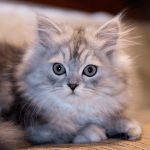
I have four cats and three of them are on various medications. Two of them had major medical issues or traumas in the last six months and require ongoing care and treatment. What have I done wrong for them? Yes, they are considered seniors, but even this doesn't seem a good explanation. I have always tried to make things better for them health wise, and tried alternative therapies, but it is becoming a strain financially and emotionally. Am I supposed to learn something from this? Let nature take its course? I know people whose cats eat dry food and they are still going strong. Have I projected negative energy on them? Thank you for your insights.
Jennifer
Astrea:
There is some financial help available to you. Many insurance companies now offer medical coverage for animals even when there are pre-existing conditions. Also, many of the companies that make the medicines your cats must have will give you some assistance.
Write to them and ask your vet what kinds of grants and programs are available. I was shocked and thrilled to discover that there are many organizations that specialize in helping people in your boat.
Many of our cats are on constant medication. In fact, I don't spend a tenth on my own medical care as I do on the animals, so I can relate! Daily I face my cats getting ill and/or older. We do everything we can to keep them with us as long as they can be comfortable.
There always seems to be a way to get what we need for our cats. I know you see that too. We're fortunate to have a great vet. He knows our limits and he knows the cats' limits too. Every time we visit, he calls the next day - I wish my own doctor was so concerned!
While most of ours are still young and healthy, it's just a fact of life that older cats are going to have problems. The more good food and loving care we all give them, the longer they'll stick around. It's the same with people too, but at least a person can tell you where they hurt and sometimes what to do to make it better. We all feel helpless when our little friends are hurting.
Remember, unlike many other animals, cats choose the people they're with in life. You are doing your absolute best for your feline friends. Please don't think that you have failed them. You were the best choice for them to make because you can care for them the best. When animals are in need of special food and special care, the people chosen to live with them are special people too.
Spiritually you are so far ahead of other folks! Despite all these burdens, you seem to find a way to keep giving them the love and care they need. By helping these kitties, you've grown in your own spirituality more than you could in a hundred years if you didn't have them.
Recognize how special and rare you are as a person, and let go of any guilt or worry that you're doing the wrong thing. I know you miss out on lots of things that money could buy, but it doesn't really matter when you hear that little meow, does it? It's only money, but you have the love and devotion of four cats.
That is a wonderful spiritual accomplishment for any human being. The love of a cat is different from any other creature; be grateful that you have the opportunity to know it well.
*****
Susyn:
From your letter, it appears that you've been taking very good care of your cats, as you've invested much of your time and money in seeing that they have gotten the medical and personal care they need. It may seem unfair or worrisome to you that three of the four have had major struggles over the last six months, but I believe they may very well be trying to teach you something important.
As a Virgo, you are naturally more inclined than other signs of the zodiac to worry and find it difficult to let go of things you have no control over. Though I don't sense that you've projected negative energy onto your pets, your constant worry and attention to their problems may be exacerbating things.
There is a good chance that the lessons they are providing for you during this time of trouble are designed to help you release fear and worry and trust more in Spirit, the natural order of life, and Universal timing.
It sounds like you've created a high level of stress by blaming yourself for their health issues. It's important for you to relax a bit and continue to be open to trying new approaches. Although you've done a lot of research on how to better care for your cats, it may be a good idea to continue to seek out alternative methods of care until you see an improvement in their health.
Your letter suggests that you believe that wet cat food (versus dry) is best for your cats. There are different schools of thought on this, and many vets who contend that the opposite is true.
You might try changing their food to see if that makes a difference in their health and behavior. You don't mention what their particular health issues are, but something as simple as changing their drinking water to a more purified source might also bring about some improvement in their well-being.
If their issues continue or worsen no matter what you try, it may be time to turn their care and well-being over to the Universe. If you'll spend some time meditating on each cat and its particular problem, you can access intuitive guidance on what to try next or if it is time to let go and let nature take its course. I don't feel that any of them are leaving the earth plane at this point in time, however, but are simply in a cycle where they need more care and attention than usual.
These troubles will most likely dissipate with time. You'll soon return to having a healthy, happy herd of cats surrounding you, so don't worry. Just keep following your instincts and trust that your willingness to do whatever is necessary to help them will be enough.
Astrea:
Many times in life we hear, "You will always have what you NEED, but not necessarily what you WANT." Your spirit must have needed to experience the feeling of leaving your human body, and the suggestion in the next chapter of Sylvia Brown's book was all it took to get you there.
Even though you hadn't read it yet, your SOUL recognized the title of that chapter as something it had been seeking, and your soul, knowing that you had that reference to read after your experience, got with it and out you went!
While I don't usually recommend her books, Sylvia Brown has a wide reaching and powerful effect on lots of people. A Gemini like you would be able to relate easily to her writing and put it to good use. Synchronicity - you gotta love it!
I like your description of "getting caught." That's exactly what it feels like, isn't it? One minute you're free and hovering above the room, and the next minute, ZAP! back down into your corporeal form you go!
As a little kid, I loved that "feeling of return." With practice, most of the time we can control that event, but sometimes, when our physical ears hear a distracting noise or something else occurs to knock us back into reality, back we go. With practice you will be able to control your return better.
I find it interesting that you were visiting your mother-in-law and not someone in your own genetic family. Evidently, you and your husband got married for reasons that are even deeper than love. His family's interest in "psychic stuff" will nurture your children in such matters and help them to grow into their own abilities.
You'll never have to be concerned that when your daughter visits them, she'll be discouraged from exploring her own psychic life and power. My parents encouraged me to develop my psychic senses in a time when it wasn't nice to even discuss such things in public. Heck, it's STILL not considered a great topic at the dinner table in some families!
Your kids will get to talk about it ALL and ask questions and read and study. This is going to give them such an edge in life! Talk with your husband about how you want to present this to your kiddos, so that you are united in your approach and ready to tell them their experiences are all natural and okay.
A word or two of warning: Geminis often have difficulty staying grounded in REAL LIFE. Don't get so strung out on your ASTRAL life that you neglect what you're doing here on Earth.
You are at the beginning of a long journey to learn where your power really lies. Try to be patient with this process and take your time.